Why Are Vassa (Rainy Season) and Vesak Late Sometimes?
Updated: April 30, 2026: Original article in 2020.
This year is 2026, which is a leap year, and Vassa starts on July 30th (plus or minus a day due to different traditions).
Quick Chart for Leap Years (When Vesak and Vassa are Late)
Other Years:
- 2020 (2-year leap year)
- 2023 (3-year leap year)
- 2026 (3-year leap year)
- 2028 (2-year leap year)
- 2031 (3-year leap year)
- 2034 (3-year leap year)
Introduction
There seems to be some confusion about when Vesak or Vassa falls this year (2026). This is a special year, and Vassa begins the day after the full moon at the end of July.
However, some traditions believe that Vesak and Vassa fall one month earlier. Who is correct?
Today we will explain how the two calendar systems work and which one should be followed.
Mass Market Calendars and Governments
Yes, they designate the same Full Moon regardless of the year. This is a simpler approach for them. However, monks who follow the commentaries will tell you that this leap year method is the correct way to handle the calendar, which is why confusion arises every two or three years.
The Buddhist Calendar
The Buddhist Calendar follows the lunar cycles. We all know that the Uposatha day falls on the new and full moon cycles, with minor Uposathas on quarter-moon cycles. We do not follow the Gregorian calendar or observe our religious days on Sundays.
Buddhism follows the moon.
Vesak is based on a full moon day
Dhammacakkapavatthana was based on a full moon day.
We don’t use the Solar Calendar.
We use the Lunar Calendar.
Leap Year
To keep the seasons aligned, we must adjust for the difference between the solar and lunar calendars; otherwise, winter would eventually shift into summer, and summer into winter.
Even the Solar Calendar adds one day every four years; this is known as a leap year.
The Solar Calendar is 365 days per year.
The Lunar Calendar is 354 days per year.
The Lunar Month is 29 days and 12 hours and change.
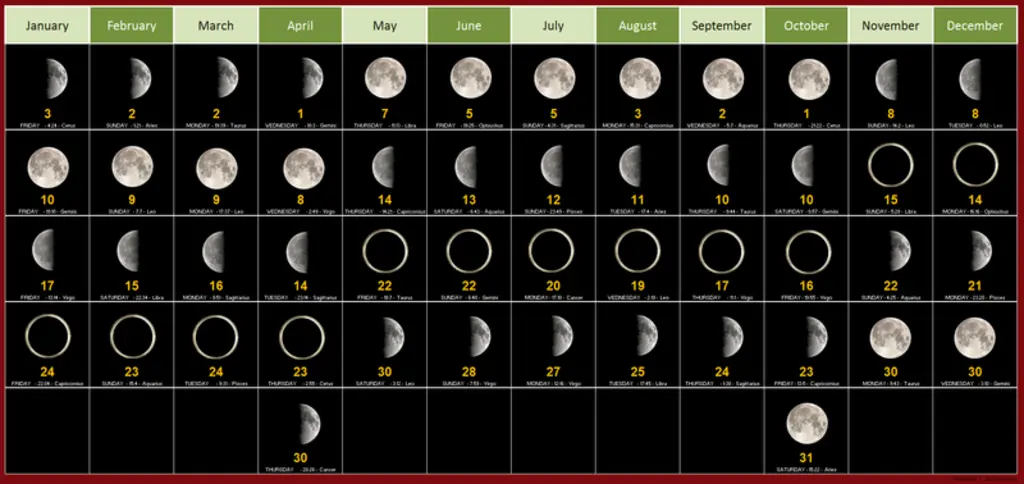
From Wikipedia
The difference is 11 days per year.
Over eight years, the difference accumulates to 88 days—roughly three months. This is why we must adjust every eight years.
8 x 11 is 88, and that is divisible by 29 days, or roughly one Lunar Month.
We adjust for this time lag at three separate intervals.
3 years
3 years
and 2 years.
3 + 3 + 2 is 8 right?
Therefore, in the Lunar Calendar, we add an extra lunar month (two pakkha) to the Hot Season. While a season typically comprises eight pakkha (new or full moon cycles), this year’s Hot Season includes ten.
Rainy Season comes after Hot Season, and now the rain is just starting to fall on a more regular basis in Myanmar. The lunar calendar is good for judging the weather. So plan your vacations accordingly!
Typically, we add an extra month every three years. However, in this eight-year cycle, the third adjustment occurs after only two years (3+3+2=8).
And so there you have your answer about which calendar is correct. Some traditions follow the Lunar Calendar while others follow the LuniSolar calendar (Solar mixed with full moons).
Remember, Buddhism follows the Lunar Calendar, which is also still used in India. They maintain two systems: one originating from British rule and the other rooted in Hindu/Buddhist tradition.
For this reason, Vassa—the Buddhist Rainy Season—begins the day after the full moon on July 29th (in 2026). Vassa officially starts on July 30th.
Is Vesak Late too?
You may have noticed that some people celebrated Vesak (the Buddha’s Birth, Enlightenment, and Death) in two different months. This happened for the same reason. This year, the Buddhist Calendar adds an extra lunar month. The next lunar leap month will be three years from now, so mark your calendars!
So practice well and practice correctly this upcoming rainy season on July 30th.
An app for this.

Do you have Buddhist Sun ? You can find it in the iOS App Store and the Google Play Store. It is free.
Below is a video of Sayadaw U Kumarabhivamsa, who shared this information with me in detail. Afterwards, we made a less complex video for you all to watch.
https://www.youtube.com/watch?v=ATBBVmJiTUc&feature=youtu.beJoin Our Mail List

Click below to search subjects