Summary
The Perfume Chamber is a small enclosed room with flowers and perfumes where the Buddha once dwelled. Today, the Perfume Chamber is duplicated in many monasteries in Sri Lanka.
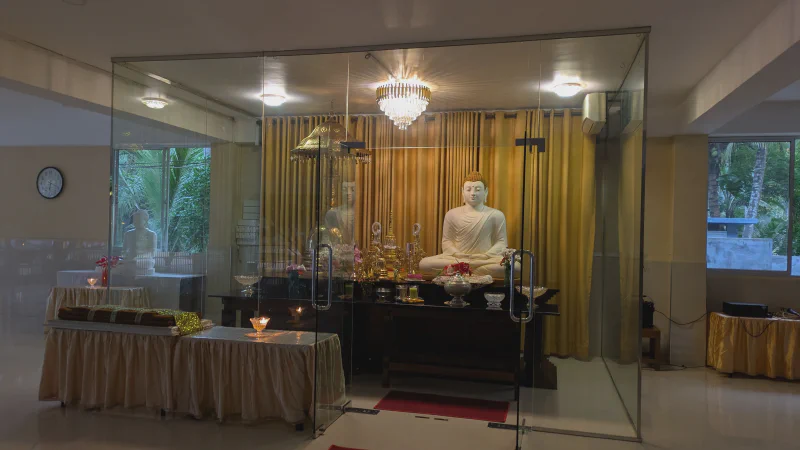
Perfume Chamber at our monastery in Katana, Sri Lanka.
Introduction
If you look through the Pāḷi texts to find a physical description of the Buddha’s personal chamber called the Gandhakuṭī (Perfume Chamber) at Jetavana, you might be surprised by what is missing. There is not much information on this (at least from what I could find). I wanted to write an article on what this room was actually like because our monastery and several others have a perfume chamber for our Buddha.
However, if we look in the commentaries (Aṭṭhakathā), we can see a great-sized chamber through the description of its construction, even though the history left in its ruins looks dismal. We can also see the daily chores of the monk, Venerable Ānanda, who had to clean it.
tatra sudaṃ āyasmā ānando aniccatādipaṭisaṃyuttāya dhammiyākathāya taṃ mahājanaṃ saññāpetvā jetavanaṃ pavisitvā dasabalena vasitagandhakuṭiṃ vanditvā dvāraṃ vivaritvā mañcapīṭhaṃ nīharitvā papphoṭetvā gandhakuṭiṃ sammajjitvā milātamālākacavaraṃ chaḍḍetvā mañcapīṭhaṃ atiharitvā puna yathāṭhāne ṭhapetvā bhagavato ṭhitakāle karaṇīyaṃ vattaṃ sabbamakāsi.
Then, the Venerable Ānanda, having instructed that great crowd with a Dhamma talk connected with impermanence and other such topics, entered Jetavana. He paid homage to the Perfumed Chamber where the one of Ten Powers had resided, opened the door, took out the bed and chair, dusted them, swept the Perfumed Chamber, discarded the withered flowers and rubbish, brought the bed and chair back, and placed them in their proper places again, performing all the duties that were to be done when the Blessed One was present. Sīlakkhandhavaggaṭṭhakathā
The Grand Construction:
We know the wealthy merchant Anāthapiṇḍika spent a huge amount of money to build it. As described in the Apadāna-aṭṭhakathā, he laid out millions just to buy the land and initiate the construction, placing the Buddha’s chamber dead center:
tasmiṃ samaye anāthapiṇḍiko gahapati pañcahi sakaṭasatehi bhaṇḍaṃ ādāya rājagahaṃ gantvā attano piyasahāyakassa seṭṭhino gehaṃ gantvā tattha buddhassa bhagavato uppannabhāvaṃ sutvā balavapaccūse devatānubhāvena vivaṭena dvārena satthāraṃ upasaṅkamitvā dhammaṃ sutvā sotāpattiphale patiṭṭhāya, dutiye divase buddhappamukhassa saṅghassa mahādānaṃ datvā sāvatthiṃ āgamanatthāya satthu paṭiññaṃ gahetvā antarāmagge pañcacattālīsayojanaṭṭhāne satasahassaṃ datvā yojanike yojanike vihāraṃ kāretvā jetavanaṃ koṭisanthārena aṭṭhārasahi hiraññakoṭīhi kiṇitvā navakammaṃ paṭṭhapesi.
At that time, Anāthapiṇḍika the householder, having taken merchandise in five hundred carts, went to Rājagaha, and visiting the house of his beloved friend, the chief minister, heard there of the Buddha, the Blessed One, having arisen. Very early in the morning, through the power of deities, with the gates opened, he approached the Teacher, listened to the Dhamma, and was established in the fruit of stream-entry. On the second day, having offered a great donation to the Sangha with the Buddha at its head, and having received the Teacher’s promise to come to Sāvatthī, he spent a hundred thousand (coins) at a distance of forty-five leagues on the way, had monasteries built at every league, bought Jetavana for eighteen crores of gold coins spread out, and initiated new construction work.
so majjhe dasabalassa gandhakuṭiṃ kāresi, taṃ parivāretvā asītiyā mahātherānaṃ pāṭiyekkaṃ ekasannivesane āvāse ekakuṭikadvikuṭikahaṃsavaṭṭakadīgharassasālāmaṇḍapādivasena sesasenāsanāni pokkharaṇicaṅkamanarattiṭṭhānadivāṭṭhānāni cāti aṭṭhārasakoṭipariccāgena ramaṇīye bhūmibhāge manoramaṃ vihāraṃ kāretvā dasabalassa āgamanatthāya dūtaṃ pāhesi.
In the center, he built the Perfumed Chamber for the Ten-Powered One, and surrounding it, individual residences for eighty great elder bhikkhus, and other dwellings such as single cells, double cells, swan-shaped dwellings, long and short halls, and pavilions, as well as ponds, walking paths, night shelters, and day shelters. Thus, he had a beautiful monastery built on a lovely piece of land at the cost of eighteen crores, and sent a messenger for the arrival of the Ten-Powered One. Apadānaaṭṭhakathā (pa)
The Archaeological View
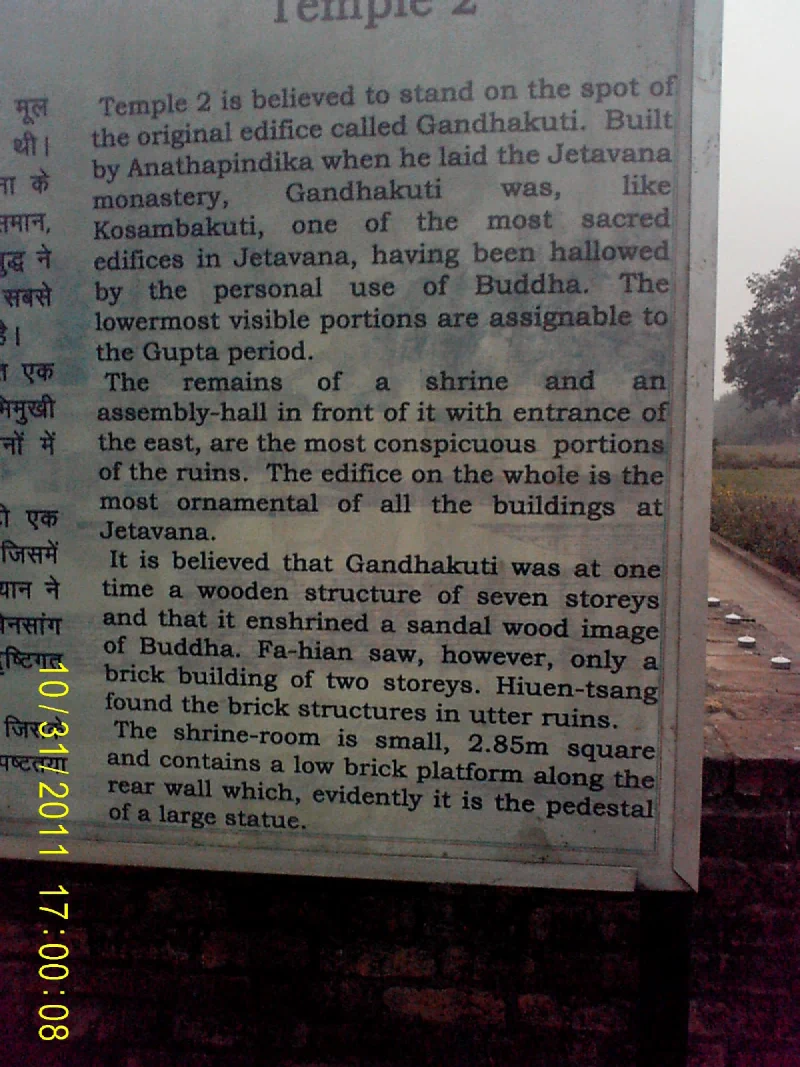
If you visit the archaeological park at Sāvatthī today, the sign at “Temple 2” provides fascinating historical context about what this structure became over the centuries.
Temple 2 is believed to be the exact spot of the original Perfume Chamber (Gandhakuṭī) built by Anāthapiṇḍika. Because it was used by the Buddha himself, it was considered one of the most sacred buildings in Jetavana. The ruins we see today, specifically the lowermost visible portions, belong to the Gupta period. Overall, what remains is considered the most ornamental of all the buildings at the Jetavana site.
It is interesting that the scale of the building changed dramatically throughout history. It is believed that the Perfume Chamber was once a massive seven-story wooden structure that enshrined a sandalwood image of the Buddha. However, when the Chinese pilgrim Fa-hian visited, he saw only a two-story brick building. Later, when Hiuen-tsang arrived, he found the brick structures in utter ruins.
Although it has a wondrous history, the actual shrine room is surprisingly small, measuring only 2.85 meters square. Inside, there is a low brick platform along the rear wall, which is evidently a pedestal for a large statue.
The Reality of the Perfume Chamber:
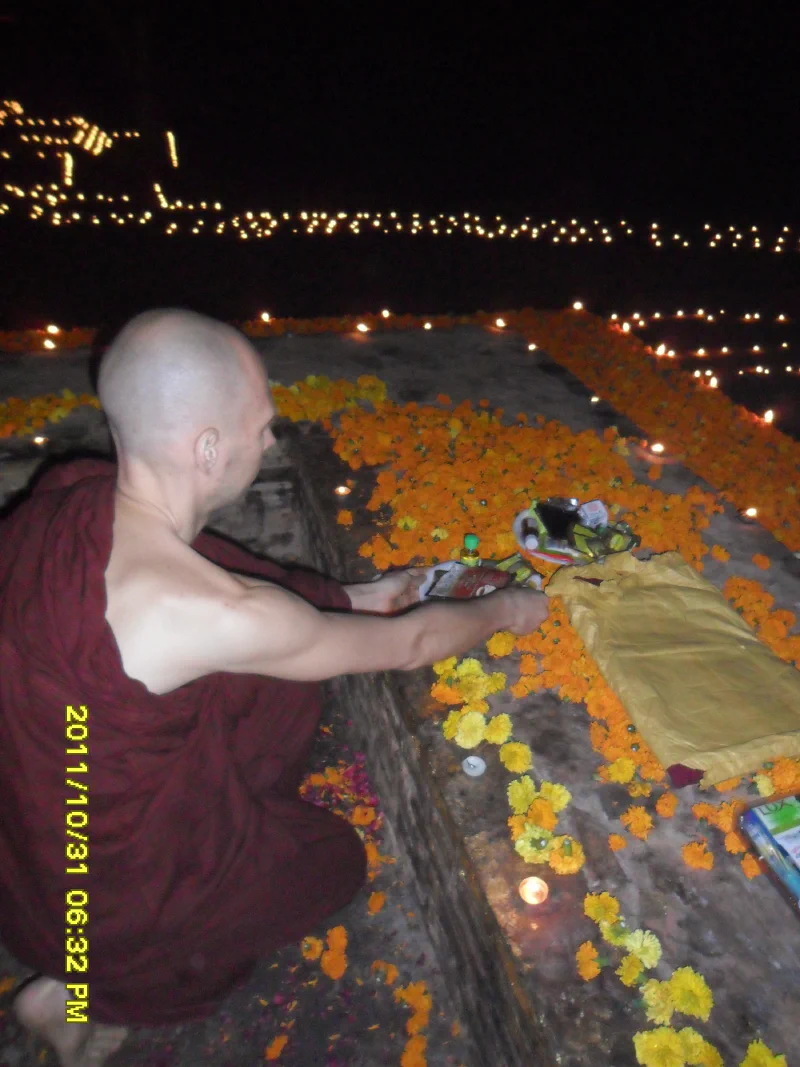
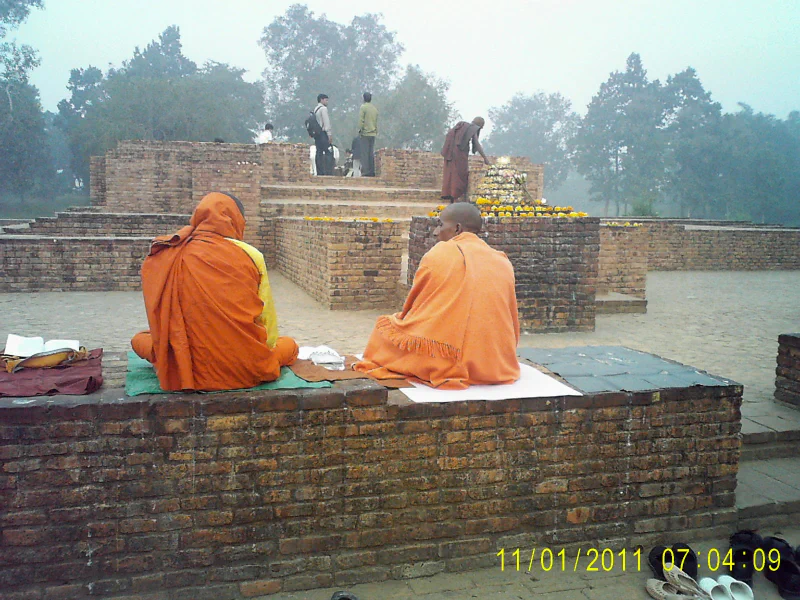
We know the room was called the “Perfume Chamber” because it was constantly filled with floral offerings and incense from devoted lay followers. People would arrive with their hands full of perfumes and flowers (gandhapupphādihatthā).
sākiyāpi kho anuppatte bhagavati ‘‘amhākaṃ ñātiseṭṭhaṃ passissāmā’’ti sannipatitvā bhagavato vasanaṭṭhānaṃ vīmaṃsamānā nigrodhasakkassa ārāmo ramaṇīyoti sallakkhetvā tattha sabbaṃ paṭijagganavidhiṃ kāretvā gandhapupphādihatthā paccuggamanaṃ karontā sabbālaṅkārapaṭimaṇḍite daharadahare nāgarikadārake ca dārikāyo ca paṭhamaṃ pahiṇiṃsu, tato rājakumāre ca rājakumārikāyo ca tesaṃ anantarā sāmaṃ gantvā gandhapupphacuṇṇādīhi pūjayamānā bhagavantaṃ gahetvā nigrodhārāmameva agamaṃsu.
When the Blessed One arrived, the Sākiyans, desiring to see “our chief kinsman,” assembled and, inquiring about the Blessed One’s dwelling place, decided that the Nigrodha Sākiyan’s park was delightful. There, they had all arrangements made, and then, holding perfumes and flowers in their hands, they went to greet him, sending first the young city boys and girls adorned with all ornaments, then the royal princes and princesses. Following them, they themselves went and, paying homage with perfumes, flowers, and powders, escorted the Blessed One to the Nigrodha Park. Mahāvaggaaṭṭhakathā
But we only really see these flowers because they had to be cleaned up by the attendant of the Buddha, Ānanda.
Even after the Buddha passed away, Venerable Ānanda kept this routine. To this day, monks also take care of the Perfume Chamber, offering flowers and other items to the Buddha inside.
Perfume Chamber at our monastery in Katana, Sri Lanka.
Conclusion:
Today, monasteries have a Perfume Chamber which can be used not only to remember and reflect on the Buddha, but also to remember the place where he spent much of his time. It is a part of Sri Lankan monastic life.
Summary Poem
The ancient walls are hard to know,
Lost to ruins from long ago.
Yet merchants built a chamber so grand,
The finest dwelling in all the land.Where Ānanda once swept the dusty floor,
Clearing withered flowers from the door.
Today we worship at this sacred kuṭi,
Reflecting upon the Buddha’s vimutti.
Click below to search subjects
Join Our Mail List
Get updates on new Dhamma teachings, essays, and videos delivered to your inbox.
Subscribe to Updates