Summary
- Easy to support does not mean that the monk can take care of himself.
- Easy to support means that the monk is content with the four requisites he is provided with.
- Although it is easier to support a monk who uses money, the monk is being supported with unallowable gifts and encouraged to break the Buddha’s rules.
Introduction:
The Metta Sutta brings up the term Subharo, which means easy to support. But the same sutta also says that the monk should not do anything that the wise would criticize.
santussako ca subharo ca, appakicco ca sallahukavutti; Contented and easy to support, with few duties and light in living;
santindriyo ca nipako ca, appagabbho kulesvananugiddho. Calm in faculties, discerning, not impudent, not greedy among families.
na ca khuddamācare kiñci, yena viññū pare upavadeyyuṃ; He should not commit any slight wrong, by which other wise ones might criticize him;
sukhinova khemino hontu, sabbasattā bhavantu sukhitattā. May all beings be happy and secure, may they be happy in themselves.
What is Easy To Support?
A monk who uses money, cooks for himself, drives for himself, and stores food is easier to support in terms of the view of the laypeople. They don’t have to worry if the monk does not have food or if someone will offer food for him. The monk can just buy it all himself. He can pull food out of the refrigerator that was given to him days earlier. He can drive himself to families’ houses, eat there, and collect more money to feed the cycle of self-support. This is “easy to support” in the sense that the laypeople don’t have to do anything. Give a kid money, and he will probably like that better. Not only that, it is a lot easier to do. One does not need to shop around or wonder what items would be liked. But would you give $500 to a 10 year old? Monks have some qualities similar to a 10 year old that the Buddha wanted to protect. He wanted the monks to be dependent on laypeople each and every day. Monks who use money have larger expenses and accept money from laypeople. A person might have only $100 to give, and decides to give it to the monk instead of the monastery’s general fund. The monastery is often cash poor while the monks are often quite wealthy.
The Vinaya monk is indeed more difficult to support from the lay person’s perspective because the Vinaya rules prohibit the monk from handling money and cooking for themselves. They also must not store food overnight and they must have new food offered each day after dawn.
The laypeople must provide food for him daily and offer it to him. They must drive him around where he needs to go. He also cannot travel with a woman by pre-arrangement. This is difficult because most of the volunteers are women. If he needs something from the store, someone must buy it for him, usually without him present.
So if being easy to support is a quality of a “good monk,” then would the Vinaya monk not be a good monk? But the Buddha said that the Vinaya is needed for loving-kindness meditation and also that the monk should be easy to support. So there must be something else to it.
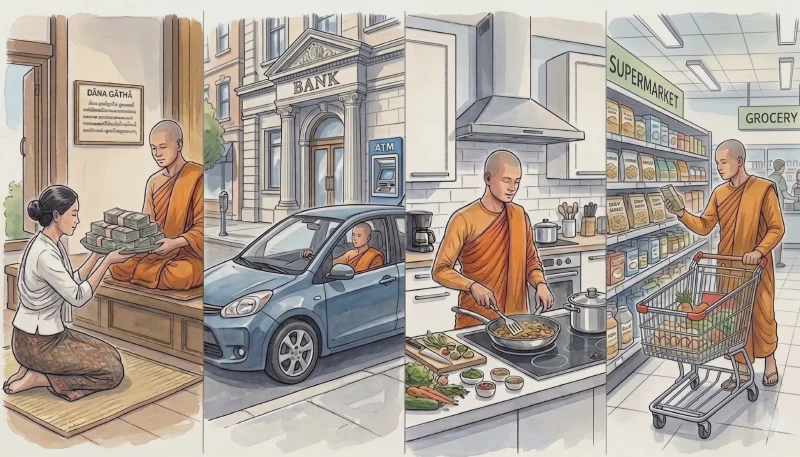 (A monk is indeed easy to support, if he uses money)
10 Basic Precepts
The novice monks have 10 basic precepts that they must follow. They are very important and represent the foundation of the monastic life. The last rule of the ten is that the monk cannot accept money or gold.
All that said, the Buddha did allow for a helper to handle money for the monks by the supporters . This helper is called a kappiya. The kappiya is a layperson who is appointed by the monks to handle money and other things that the monks are not allowed to handle. Here is a summary about this:
“Bhikkhus, there are people of faith and respect, and if they should entrust money in the hands of a kappiya and instruct him saying, ‘With this money offer allowable requisites to this Venerable One,’ then bhikkhus I allow you to accept whatever allowable requisites are obtained with that money, but bhikkhus, in no way whatsoever do I allow money to be accepted or searched for.” (Translation from: A Life Free From Money , U Dhamminda)
What is Real Subharo?
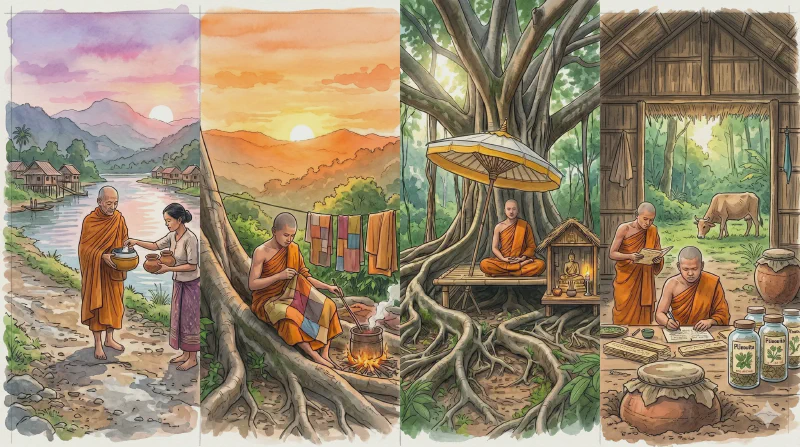
Subharo means that the monk is satisfied with what he is given. He does not question the food that is given to him. He does not ask for more. He does not ask for something different. He is simply satisfied with what he is given.
The commentaries say this about subharo:
sukhena bharīyatīti subharo, suposoti vuttaṃ hoti..
He is easily supported (fed), hence subharo, meaning easy to maintain.yo hi bhikkhu sālimaṃsodanādīnaṃ patte pūretvā dinnepi dummukhabhāvaṃ anattamanabhāvameva ca dasseti, tesaṃ vā sammukhāva taṃ piṇḍapātaṃ ‘‘kiṃ tumhehi dinna’’nti apasādento sāmaṇeragahaṭṭhādīnaṃ deti, esa dubbharo. For the bhikkhu who, even when his bowl is filled with choice rice and meat, still shows displeasure and discontent, or in front of the donors disparagingly gives that alms-food to novices or laypeople, saying, “What have you given?"—such a one is difficult to support.
etaṃ disvā manussā dūratova parivajjenti ‘‘dubbharo bhikkhu na sakkā positu’’nti. Seeing such a one, people avoid him from afar, saying, “This bhikkhu is difficult to support; he cannot be maintained.”
yo pana yaṃkiñci lūkhaṃ vā paṇītaṃ vā appaṃ vā bahuṃ vā labhitvā attamano vippasannamukho hutvā yāpeti, esa subharo. But the one who, having received anything, be it coarse or fine, little or much, sustains himself with a happy and serene face—such a one is easy to support.
etaṃ disvā manussā ativiya vissatthā honti – ‘‘amhākaṃ bhadanto subharo thokathokenapi tussati, mayameva naṃ posessāmā’’ti paṭiññaṃ katvā posenti. Seeing such a one, people become extremely confident and, vowing, “Our venerable master is easy to support; he is content even with a little; we ourselves will maintain him,” they do so.
evarūpo idha subharoti adhippeto. Such a bhikkhu is here intended as easy to support.
The Four Dependencies Talk After Ordination
After a monk receives his higher ordination, he is given a list of the four requisites that he is dependent on and how he should appreciate what is given to him. These are the four requisites that he must strive to obtain throughout his life. This list is given to all monks of all traditions, whether they use money or not.
‘‘Anujānāmi, bhikkhave, upasampādentena cattāro nissaye ācikkhituṃ –
“I allow, bhikkhus, that one who confers higher ordination should declare the four dependencies:
piṇḍiyālopabhojanaṃ nissāya pabbajjā, tattha te yāvajīvaṃ ussāho karaṇīyo; atirekalābho – saṅghabhattaṃ, uddesabhattaṃ, nimantanaṃ, salākabhattaṃ, pakkhikaṃ, uposathikaṃ, pāṭipadikaṃ.
“The going forth is dependent on food received by alms-round; therein, for you, throughout life, effort should be made. The extra gains are: communal meals, designated meals, invited meals, ticket meals, fortnightly meals, Uposatha meals, and first-day-of-the-fortnight meals.
Paṃsukūlacīvaraṃ nissāya pabbajjā, tattha te yāvajīvaṃ ussāho karaṇīyo; atirekalābho – khomaṃ, kappāsikaṃ, koseyyaṃ, kambalaṃ, sāṇaṃ, bhaṅgaṃ.
The going forth is dependent on robes made from rags; therein, for you, throughout life, effort should be made. The extra gains are: linen, cotton, silk, wool, hempen cloth, and blended cloth.
Rukkhamūlasenāsanaṃ nissāya pabbajjā, tattha te yāvajīvaṃ ussāho karaṇīyo; atirekalābho – vihāro, aḍḍhayogo, pāsādo, hammiyaṃ, guhā.
The going forth is dependent on lodging at the foot of a tree; therein, for you, throughout life, effort should be made. The extra gains are: a vihāra, a half-gabled house, a mansion, a terraced house, a cave.
Pūtimuttabhesajjaṃ nissāya pabbajjā, tattha te yāvajīvaṃ ussāho karaṇīyo; atirekalābho – sappi, navanītaṃ, telaṃ, madhu, phāṇita’’nti.
The going forth is dependent on putrid urine as medicine; therein, for you, throughout life, effort should be made. The extra gains are: ghee, fresh butter, oil, honey, and molasses.”
The Benefit of Helping Support
Helping a monk who follows the rules may need a little more effort. However, one needs to consider the wholesome merits in doing so. The close contact required usually results in an impromptu teaching. Furthermore, the contact with laypeople for basic support helps improve the monk’s qualities as well. He is reminded that the laypeople are there for his spiritual benefit and that he should be grateful for their support through his practice and teaching to them.
Summary Poem
A monk with money buys his meals,
And drives a car around.
Easy to support, it seems,
When worldly ways are found.
But monks who keep the ancient rules,
Are happy with what is given.
Though serving them takes extra work,
The spirit is always Dhamma driven.
Click below to search subjects
Join Our Mail List
Get updates on new Dhamma teachings, essays, and videos delivered to your inbox.
Subscribe to Updates